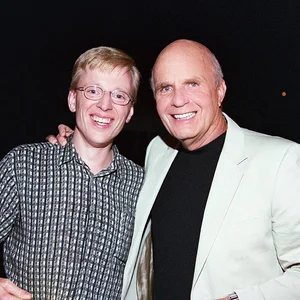
Why a Professional Photographer Decided to Step Into the Spotlight
Terry was looking down at his breakfast when I slid my phone onto the table between us.
If there’s one thing I learned after joining the speaking group he founded, Find Your Voice, it’s that Terry has strong opinions about phones at meetings. Never mind during meals. Our breakfast involved both.
He had just finished sharing how he found his own voice in his mid-50s, and how that discovery led to a simple realization: businesses don’t lack good ideas. They lack people who feel safe articulating them.
“…and as you know,” he said, pausing for another bite, “communication has really fallen over the years.”
That’s when I slid my phone between us and asked, “Why do you suppose that is?”
He looked up, eyes flaring. I smiled and pointed at the phone. His grin nearly cost him his bite.
He’s right.
As a parent of five digital natives, my wife and I fought to keep these attention-bandits away from our kids as long as we could. Somewhere along the way, we caved. My own curiosity fits this era perfectly. A forest fire of questions can now be hosed down instantly by Google, Audible, YouTube — and now GPT.
I never chose a career that felt worthy of six years of college debt. Instead, I consumed education à la carte. While managing at Fred Meyer, I enrolled in every course the Fred Meyer Institute offered. When I maxed out my CEUs, I asked permission to take supervisory-level classes. I audited college courses not for credit, but for usefulness — accounting so I could speak intelligently with my accountant, photography before the internet made it easy, and eventually, public speaking.
I wanted to communicate better behind the camera.
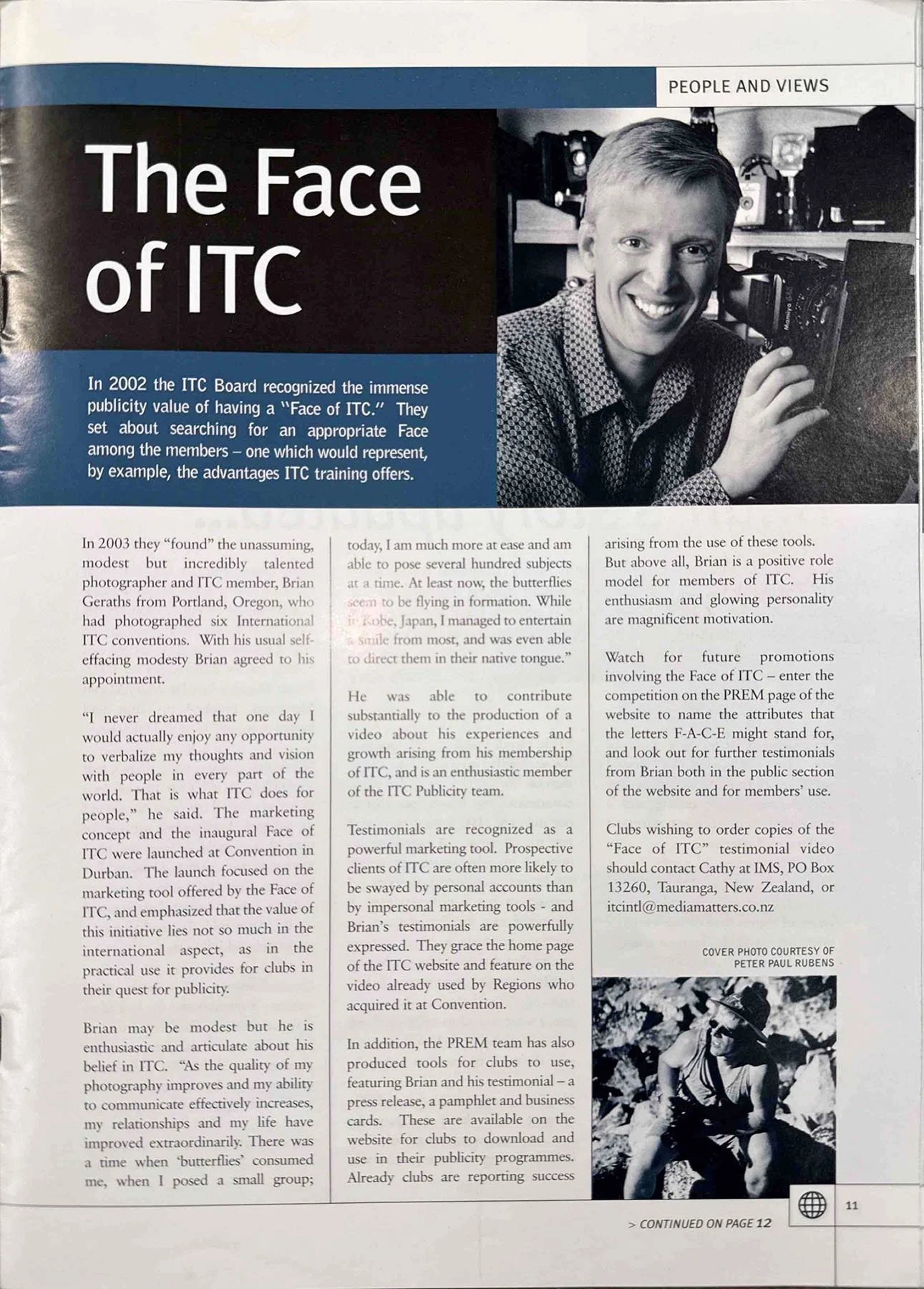
That desire led to ten years with an international speaker-training organization, where I photographed confident speakers from all over the world. It inspired me — and intimidated me. As Terry would say, I hadn’t found my voice yet.
I knew this the night my boss asked me to cover a dinner for her. A room full of executives.
What she didn’t mention was that she was also supposed to present an employee award.
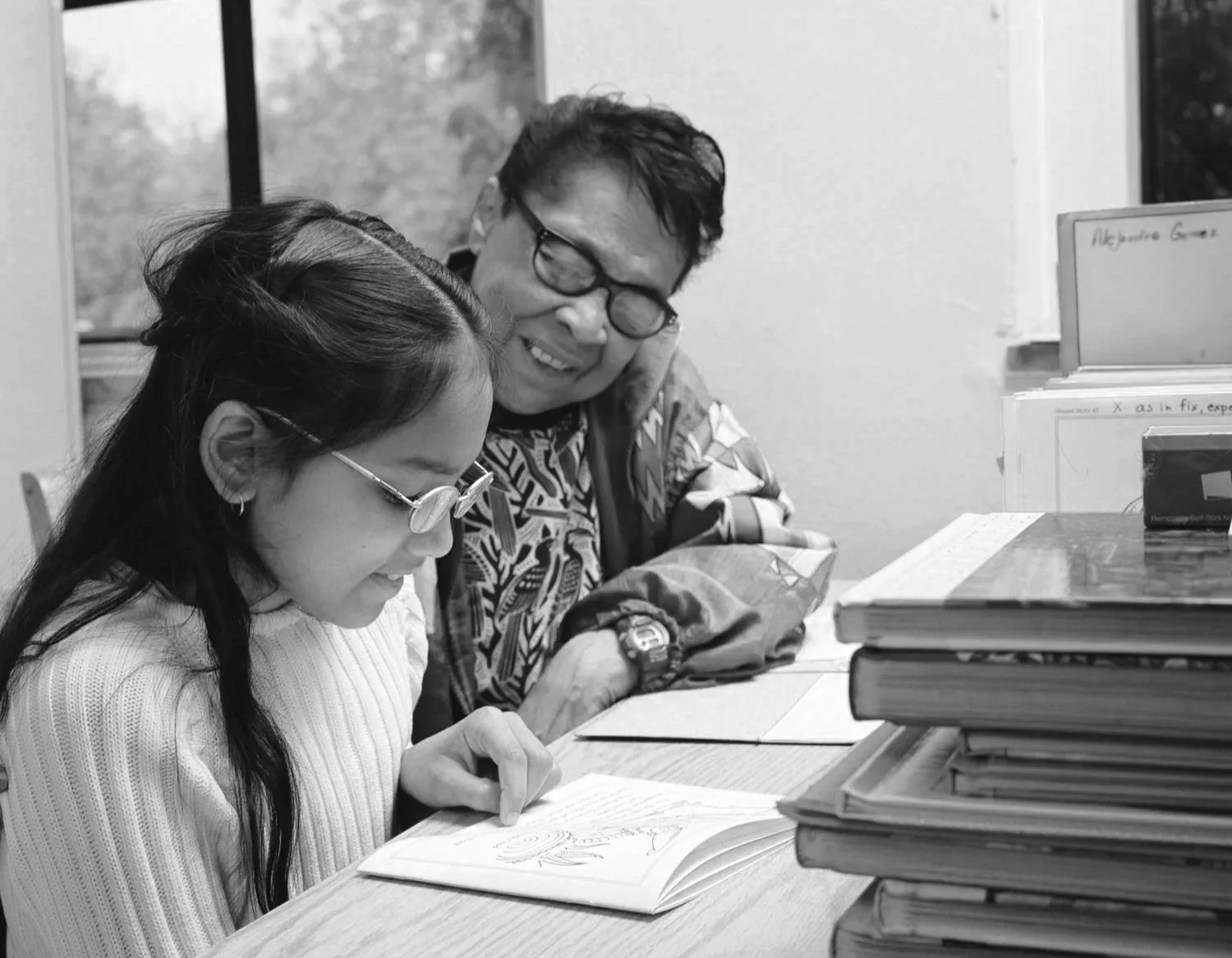
Unlike my inaugural nature photography, my “behind the scenes” gigs require me to direct those who share my discomfort with the camera.
I found out when the Division VP called my store name.
My body walked forward. My mind disappeared.
I don’t remember what I said. I remember the water pitcher shaking when I sat down. People smiled. “That was great,” they said. I just wanted my hand to stop shaking long enough to grab my glass.
By my next presentation, alcohol had become my crutch. Three gin and tonics and I was “ready” to speak at my dad’s retirement party. Eventually, I decided I wanted to face a microphone without any primers.
Fast-forward to 2018. A car accident left me with a traumatic brain injury. Speech therapy became part of my recovery — organizing thoughts, finishing sentences, finding words again. The voice I had worked so hard to build was suddenly gone.

After capturing Queen Noor of Jordan with several VIPs in 2006, I had to hop in one as well… a job and action I couldn’t have completed without newfound confidence from public speaking.
Years later, watching myself on video at a Chamber event, I saw it clearly. I was functional, but not fluent. The muscle had atrophied.
Then a friend invited me to a Find Your Voice meeting.
Have you ever noticed that the more you clean, the more you see what’s still dirty?
That was me.
Sitting across from Terry at breakfast, listening to how he built this group to help others articulate what already lives inside them, something clicked. This wasn’t about becoming a “great speaker.” It was about removing fear — the kind that quietly limits careers, relationships, and moments that matter.
I see now how easily gratitude turns into awkwardness at events meant to honor others. How important moments get hijacked by nerves. How confidence — behind a camera, at a podium, or even across a breakfast table — doesn’t come from talent alone. It comes from voice.
That same understanding is what quietly shapes my work as a portrait photographer. A relaxed expression, an honest presence, a sense of ease — those don’t come from lighting or lenses alone. They come from helping someone feel safe enough to show up as themselves. That’s the through-line behind my approach to professional headshots, even if clients don’t consciously name it that way.
Just a couple of months into weekly attendance, I’m remembering how common this fear really is, and how unnecessary it can be with the right support.
If you’re curious about Find Your Voice, click here to learn more, or simply email me. I’m happy to invite you to a meeting so you can experience firsthand what a supportive, practical, and refreshingly ego-free space this is.
It’s the most effective speaking environment I’ve experienced since my earlier training days — and by far, the most human.
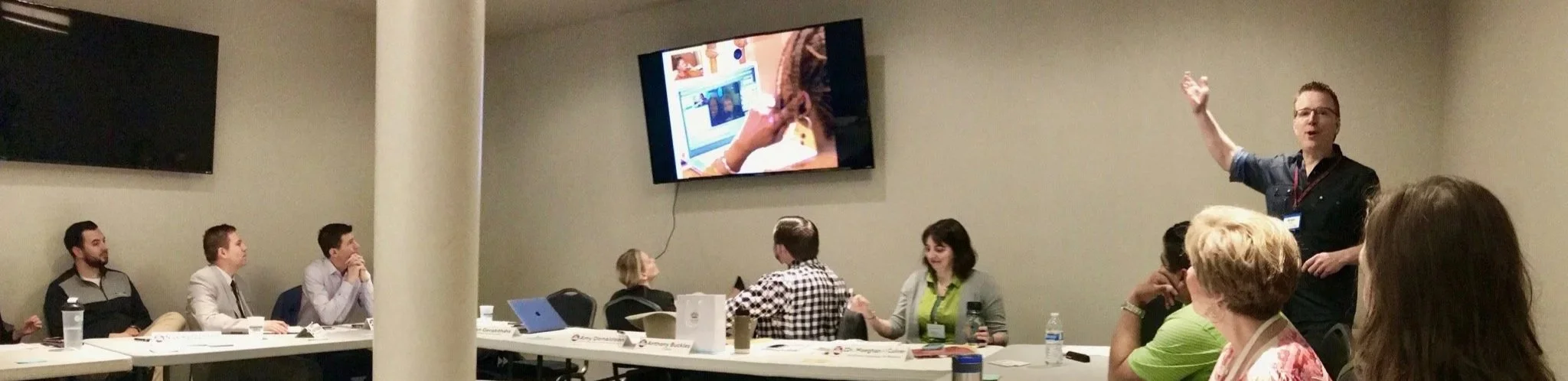
After finally saying yes to networking, I dove all-in by saying yes to the role of Education Coordinator. Why?.. because it once scared the bejesus out of me. Practice, practice, practice… Feared, no more.
This video is a great example of why I re-joined a speaking group. Speaking off-the- cuff, unscripted has inhibited my marketing.
My “audible pauses” have dwindled, but did you count how many times I said the word “below?..” HA
The more we clean, the easier it is to find the dirt. Just working to clean up my clarity…